Category: Guides

  • Budget Gorilla Trekking in Uganda

    Budget Gorilla Trekking in Uganda

    Many travelers dream of standing just meters away from a majestic mountain gorilla in the misty forests of Uganda, but worry that it’s only possible with a luxury budget. The good news is that budget gorilla trek in Uganda are very achievable with smart planning and the right choices.

    This practical guide is written for everyday travelers who want to experience one of Africa’s most magical wildlife encounters without spending a fortune. You’ll discover how to enjoy an unforgettable budget gorilla trek while staying safe, comfortable, and ethically responsible in 2026–2027.

    Why Uganda is the Best Destination for Budget Gorilla Trek

    Uganda offers one of the most accessible and affordable opportunities for budget gorilla trek in the world. With two habituated gorilla populations  in Bwindi Impenetrable National Park and Mgahinga Gorilla National Park you have excellent chances of securing permits at a lower cost than in neighboring Rwanda.

    Bwindi is the main destination for most budget travelers because it has multiple sectors (Buhoma, Rushaga, Nkuringo, and Ruhija), giving you more options for accommodation and slightly better availability of permits. The park’s lush rainforest setting creates an incredibly immersive experience, and many families and solo travelers find the trekking here manageable with proper preparation.

    What makes Uganda especially attractive for budget-conscious travelers is the variety of mid-range and budget-friendly lodges located near the park gates. You can combine your gorilla trek with other affordable activities like chimpanzee tracking in Kibale or game drives in Queen Elizabeth National Park, creating a rich multi-park budget gorilla trek without the premium price tag of fully luxury packages.

    How Much Does a Budget Gorilla Trekking Safari in Uganda Really Cost?

    Understanding the real costs is one of the most important parts of planning a budget gorilla trekking safari. The biggest single expense is the gorilla permit itself, which currently costs $800 per person for foreign non-residents (subject to confirmation for 2026–2027).

    A realistic 7–10 day budget gorilla safari for one person typically ranges from $2,800 to $4,200. This includes:

    • One gorilla permit ($800)
    • Mid-range lodge accommodation near Bwindi (full board)
    • Private 4×4 transport with driver-guide
    • Park entry fees and basic meals
    • Airport transfers

    For two people sharing a vehicle and room, the per-person cost can drop to $2,200–$3,500. Choosing mid-range lodges instead of luxury ones, traveling in the shoulder seasons, and combining gorilla trekking with other activities helps keep the budget manageable. Many travelers are pleasantly surprised to discover that a high-quality budget gorilla tour is significantly more affordable than they initially expected.

    Best Time to Go for Budget Gorilla Trekking Safaris in Uganda

    Timing can make a big difference to both your experience and your budget when planning a budget gorilla trek. The two dry seasons June to September and December to February  are the most popular because the trails are drier and trekking is generally easier.

    June to September is peak season, which means higher demand for permits and slightly higher lodge rates. December to February offers a good balance of dry weather and fewer crowds, often resulting in better availability and sometimes lower accommodation prices.

    The rainy seasons (March–May and October–November) can be excellent for budget travelers because lodge rates drop and gorilla permits are sometimes easier to secure. However, the trails can be very muddy and slippery, making the trek more physically demanding. For the best combination of weather, availability, and value, many budget-conscious travelers choose January–February or the shoulder months of June and September for their budget gorilla safari.

    Choosing the Right Accommodation for Budget Gorilla Trekking

    Accommodation is one area where you can save significantly on a budget gorilla safari in Uganda without sacrificing too much comfort. Instead of ultra-luxury lodges costing $600+ per night, excellent mid-range and budget-friendly options are available near all Bwindi sectors.

    Look for lodges and camps priced between $120 and $300 per night (single occupancy, full board). Many of these properties offer comfortable rooms or tents, good food, and helpful staff who understand the needs of gorilla trekkers. Some even provide packed lunches for your trekking day.

    Staying 2–3 nights in the same lodge is often more economical and less tiring than moving between different sectors. When planning your budget gorilla trip, prioritize lodges that are close to the park gate of your chosen trekking sector this reduces transfer costs and gives you more rest time before and after your trek.

    How to Prepare Physically and Mentally for Gorilla Trekking on a Budget

    Gorilla trekking is physically demanding, so preparation is essential for a successful budget safari in Uganda. The trek can last anywhere from 2 to 7 hours, involving steep hills, muddy trails, and dense vegetation.

    Start exercising several weeks before your trip with hill walking, stair climbing, or cardio activities. Good trekking shoes with ankle support, rain gear, and a walking stick (provided by porters) are very helpful. Bring a daypack with water, snacks, rain jacket, and camera.

    Mentally, prepare for the possibility that the trek will be challenging — but the reward of sitting quietly with a gorilla family is worth every step. Budget travelers often hire porters ($15–20) to carry their daypack, which also supports local communities. With realistic expectations and good preparation, even first-time trekkers can fully enjoy their budget safari in Uganda.

    Additional Budget-Friendly Activities to Combine with Gorilla Trekking

    • To get more value from your budget Uganda trek, combine your trek with other affordable activities. Chimpanzee tracking in Kibale Forest costs around $250 per person and is a wonderful complement to gorilla trekking.
    • Lake Mburo National Park offers excellent game drives and boat trips at much lower entry fees than other parks. A visit to the Ziwa Rhino Sanctuary en route to Murchison Falls or Bwindi is another budget-friendly highlight where you can track rhinos on foot.
    • Many travelers create a logical loop: Lake Mburo → Queen Elizabeth → Bwindi → Kibale, maximizing wildlife experiences while keeping costs down. This multi-park approach gives you a rich safari in Uganda experience without needing to spend weeks in the country.

    Booking Tips and How to Save Money on Your Budget Gorilla Trekking Safari

    • Smart booking is key to a successful budget gorilla trekking safari in Uganda. Book your gorilla permit as early as possible  ideally 6–8 months in advance  through the Uganda Wildlife Authority or a reputable tour operator.
    • Travel during shoulder months (May, November) when lodge rates are lower and permit availability is sometimes better. Consider traveling with one or two friends to share the cost of a private 4×4 and driver-guide.
    • For reliable vehicles and honest pricing, Mum and Dad Uganda Tours stands out as one of the best tour and travel companies in Uganda, offering well-maintained 4x4s at competitive rates for self-drive or private driver safaris.
    • Compare quotes carefully and read recent reviews. With careful planning and a bit of flexibility, you can enjoy a high-quality budget gorilla trekking safari in Uganda that delivers memories worth far more than the money spent.

    Conclusion: Your Budget Gorilla Trekking Safari in Uganda Awaits

    A budget gorilla trek is not only possible it can be one of the most rewarding experiences of your life. With smart planning, realistic expectations, and the right choices, you can stand face-to-face with mountain gorillas without spending a fortune.

    From the misty forests of Bwindi to the gentle giants that call it home, Uganda offers an accessible and unforgettable gorilla trekking adventure for budget-conscious travelers who are willing to plan thoughtfully.

    Start saving, book your permit early, choose comfortable but affordable lodges, and get ready for an experience that will stay with you forever. Your budget gorilla trek in Uganda is closer than you think  and it promises to be absolutely magical.
  • Self-Drive Holiday in Uganda

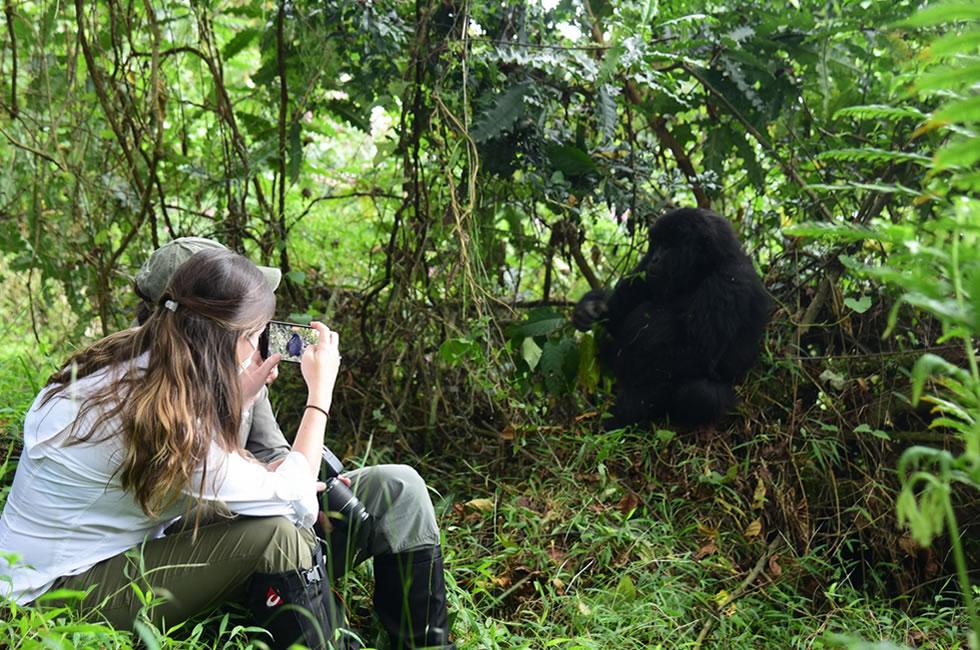
    Self Drive on a gorilla safari can be a good option! While planning self drive holiday in Uganda, Uganda self drive specialize in organizing self-drive itineraries. They will book your accommodation for you, and usually you will have a choice as to what type of accommodation you would like. They meet and greet at the airport and facilitate you getting your rental car, they will provide route maps and other useful information. This is a good option if you don’t have the time to research your itinerary yourself. It’s also a good idea to book your accommodation in advance especially during the months of December and January.

    Tips for Driving in Uganda

    • Driving is on the left hand side of the road in Uganda (so cars are right hand drive).
    • Seat belts must be worn by front seat passengers.
    • No cell phone use is allowed while driving.
    • Average speeds are 35mph (60km/h) in built up areas, 75 mph (120 km/h) on the open roads.
    • All road signs are in English.
    • All distances are in km’s.
    • A traffic light is called a “robot”.
    • Always lock your car when you park it and never leave valuables in the car,
    • “Car guards” will pop up to help keep your parked car safe.
    • A tip of a few shillings is fine.
    • Keep your windows up and doors locked when you stop at a traffic light, especially in towns and cities.
    • You’ll need a valid driver’s license (if your license is not in English, you will need to get an International drivers license),
    • Avoid driving at night if you can.

    If you have plans to take holiday that involves driving around in Uganda before, there are some rules of the road you will need to bear in mind –because things are going to get pretty hectic around that time.

    The first thing about driving in Uganda is, of course, having driving permits and of age of above 18 years old, we drive on the left. When I say ‘we’, this does not necessarily apply Ugandans but also international travelers on self drive expeditions. With a very limited inner-city public transport system in most places other than Uganda, everyone drives.  And they usually drive between 10 and 20 kilometers an hour faster than the speed limit. They slow down just for the speed cameras.

    Follow the traffic lights on road as you may do in your mother country, red traffic lights indicate a stop for everyone except … you’ve got it. They stop an extra two or three seconds turn across on-coming traffic, or just shoot through. In some areas it is considered cool to slip through behind, as long as you keep really close. If five cars can stick close enough, they can all go through. But you are allowed to be rude to those people.

  • Guide to Self Drive Tours to Bwindi Forest

    Guide to Self Drive Tours to Bwindi Forest

    A self-drive tour to view the endangered mountain gorillas in Bwindi Impenetrable National Park is incredibly one best way that you can adventure this magical side of Uganda this coming season. Best described by Sir Winston Churchill as the pearl of Africa, Uganda boasts of breathtaking landscapes and varied tourist attractions with one of star attraction being mountain gorillas. To trek these magnificent creatures in Uganda, Bwindi Impenetrable National Park is that one unique protected area you shouldn’t miss to pay a visit. It lies suitably within southwestern Uganda just at a border with the Democratic Republic of Congo (DRC). This 331 square kilometers park features mainly the montane and lowland forests. Other wildlife species to see in Bwindi National Park include 120 mammal species, 350 bird species, 27 frogs, 220 butterflies, 1000 flowering plant species, 163 tree species and 104 ferns among others.

    When you think of a gorilla self-drive tour to Bwindi National Park, take note that treks begin early in the morning at the park headquarters and for this case in the 4 main trailheads of Buhoma, Ruhija, Rushaga and Nkuringo. You track gorillas in a sector where your permit directs you to.

    Where to trek gorillas in Bwindi National Park

    Each of the 4 main sectors feature habituated families and in Buhoma you can track gorilla families like Mubare, Habinyanja, Rushegura and Katwe. The accommodation options here include Silverback lodge, mahogany springs, Bwindi Volcano Lodge, Gorilla Forest Camp, Engagi Lodge, Buhoma Lodge, Buhoma community rest camp, gorilla resort and among others. Nkuringo sector is comprised of habituated families like Nkuringo group and Christmas. This sector lies in the high elevation. This area is usually considered to offer challenging experiences. The available accommodation options include Nkuringo gorilla camp.

    Ruhija comes with habituated groups like Bitukura, Kyaguliro and Oruzogo while Rushaga area features groups such as Busingye, Kahungye, Nshongi, Bweza and Mishaya. The available accommodation options in this sector include Bwindi Jungle Lodge, Gorilla safari camp, chameleon hill lodge, gorilla haven lodge and others.

    While on the trail to trek mountain gorillas in Bwindi National Park, you have to follow the set rules and regulations which include among others; only an hour of magical encounter, only 8 visitors are allowed to track only 1 habituated family, a distance of 7 meters must be observed at all times away from gorillas, no flashlight cameras are allowed while taking photos of these large apes, no tracking gorillas when you are sick/feeling ill, keep your voices low and many more..

    How to get to Bwindi national park

    To get to Bwindi Impenetrable Forest National Park, you have 9-10 hours to drive from Kampala or Entebbe. On your self-drive tour, you can set off using a 4 wheel drive safari vehicle or by air. By road, there are many routes that take you up to this park and most of them converge around Butogota approximately 108 kilometers from Kabale Town to Buhoma sector through Ruhija about 3 hours’ drive. For those of you who are will travel from Kampala, you will drive up to Buhoma along a finest road linking up to Kabale-Ntungamo approximately 60 km.

    In Mbarara Town or drive from Ntungamo and take the right side 45 km to Rukungiri and then Kambuga to Kanungu where you will finally come to Butogota-17 km to Buhoma sector. From Kampala to Bwindi National Park, it is about 550 kilometers’ drive. If you pass via Kasese/Fort Portal-there are two (2) routes-one which leads you through Katunguru, Ishasha sector of Queen Elizabeth National Park that also rewards you with excellent views of the rare tree climbing lions and then you come to Kihihi approximately 3-5 hours’ drive. The other route takes you via Mbarara then to Ishaka about 33 km to Kagambe through Kabale road at a junction with Ntungamo to Rukungiri route then you arrive to Buhoma area. By air, you can take a direct flight from Entebbe airport or Kajjansi airfield and you land into Kisoro airstrip where you can connect by car.

    Best time to go for gorilla trekking in Bwindi

    A self-drive tour to Bwindi National Park to trek mountain gorillas can be done at any time of the year. On the other side, you need to take note of dry and wet season-the dry season starts from June to September and December to February and this is normally considered as the best for gorilla trekking. The wet season is equally ideal and starts from March to May then from October to November. The challenge with this season is that it is characterized by heavy rainfall and the ground remains slippery and muddy.

    What to pack for a self-drive trip to see Bwindi gorillas

    When you think of a gorilla self-drive trip to Bwindi National Park, you have to think of which items to pack. They include waterproof hiking boots, garden gloves, rain jacket or poncho, long sleeved shirt/blouse/t-shirt or long trousers or long pants, energy giving snacks and bottled water, cameras and additional batteries, long socks, day pack, insect repellents, anti-malarial tablets, first aid kit, hat, sun glasses, pair of binoculars, walking stick-but this one you will find it at the park headquarters or lodge where you will spend a night in Bwindi and this can be got at the park headquarters/lodge, money belt, toiletries a mention but a few.